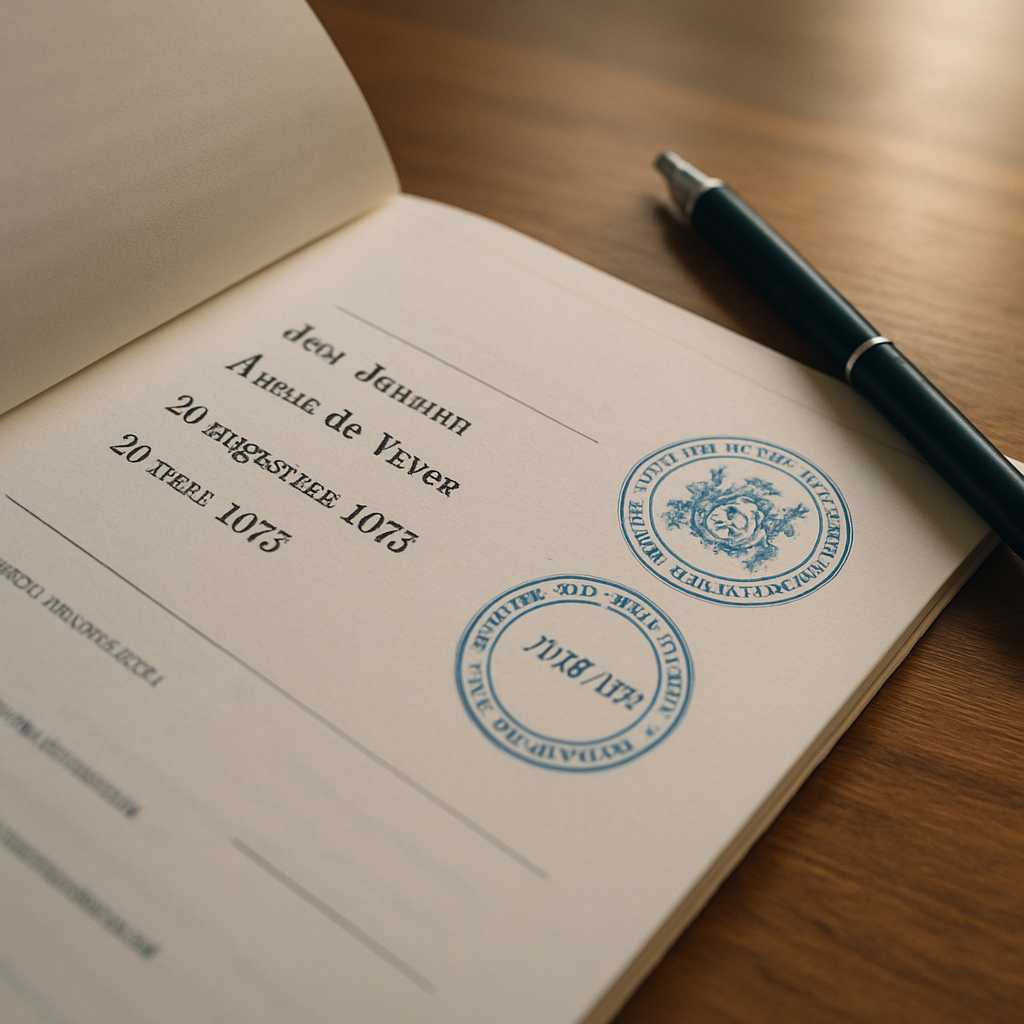
Dutch Document Translation Issues — Names, Dates and Stamps
Explore common issues involving compound names, date formats, diacritics, official stamps and seals when Dutch documents are translated for formal use.

Practical document guidance
Clear guidance on certified, notarised and sworn translations, document requirements, common mistakes and preparation for official use.
Highlighted guide
Names, dates, stamps and handwritten information can be just as important as the main body text in an official document.
Explore common issues involving compound names, date formats, diacritics, official stamps and seals when Dutch documents are translated for formal use.
Official-use guidance
Start with the receiving organisation or document type when the translation is being prepared for a regulated or official submission.
Guidance for international doctors submitting non-English documents to the General Medical Council.
How translated documents and certified copies fit into the HCPC international application process.
Practical guidance for supporting documents that are not in English or Welsh.
What to check before submitting translated degree and qualification documents in the UK.
Translation requirements for financial evidence used in UK visa and immigration applications.
Common consistency, certification and completeness problems in translated invitation letters.
Recently published
Browse the newest articles or search by document, certification type, language or intended use.
Showing the latest articles
Understand common problems involving Dutch names, date formats, diacritics, official stamps and seals.
Learn when an insurance policy may need certified translation for claims, legal matters or formal review.
Review the key content, certification details and formatting considerations for police clearance documents.
Identify terminology, formatting, omission and certification mistakes before submitting a translated police certificate.
Follow a practical checklist covering source-document quality, translation, certification and submission preparation.
A practical overview of preparing and translating a police clearance certificate for a formal application.
Browse the website
Explore supported documents, available languages and the main translation service options.
Find information for personal certificates, identity documents, academic records, legal papers and company documents.
Browse documents → 02Review the language support available for personal, academic, immigration, legal and commercial documents.
Browse languages → 03Compare certified, notarised, sworn and legalisation-related translation routes before ordering.
Compare services →Using the guidance
Translation and certification requirements can vary according to the document, authority, application and destination country. Use the guides to prepare useful questions, then compare the information with the written instructions you have received.
The receiving authority or organisation determines the format and certification it is willing to accept.
Certified, notarised and sworn translations are different. Additional authentication should be based on the stated requirement.
Include every page and make sure names, dates, stamps, seals, reference numbers and handwritten entries are visible.
Sending the authority’s wording alongside the document helps the translation team identify the appropriate route.
About the resource library
These answers explain how to use the articles and when to request document-specific guidance.
The library covers certified, notarised and sworn translations, individual document types, language-specific issues, common mistakes, preparation checklists and formal submission questions.
No. Requirements can differ according to the authority, application, document and destination. Check the receiving organisation’s written instructions before choosing a service.
A general guide cannot make an acceptance decision on behalf of an authority. The receiving organisation decides what it will accept, so its instructions should take priority.
Send a complete readable copy, the source and target languages, the receiving organisation or destination, your deadline and any written instructions you have received.
Document-specific support
Send a readable copy of the document together with the required language, intended destination and deadline for review.